Qatar to invest $15 billion in Turkish financial markets as Ankara-US relations hit new low (Continued)
Shift in the Structure of Military Coalitions
On March 31, 2018, Prof Michel Chossudovsky wrote that military alliances are being redefined and Turkey is contemplating a “NATO-Exit”, the implications of which are far-reaching.
From a broader military standpoint, Turkey is actively cooperating with Russia, which has recently pledged to ensure Turkey’s security, Chossudovsky said and quoted Turkish Air Force retired Major General Beyazit Karatas as saying that “Moscow underscores that Turkey can calmly withdraw from NATO and after doing so Ankara will have guarantees that it will not face any threat [from US-NATO] in terms of ensuring its own security.”
In an interview with the Sputnik correspondent Suliman Mulhem, General Karatas said that the latest statements by senior Russian officials show that Ankara should not rely on NATO when it comes to maintaining its national security.
He was alluding to the statement of Alexander Sherin, first deputy head of the Russian Lower House's Defense Committee, who said that CSTO [Collective Security Treaty Organization] countries, Syria, Iran, North Korea, China and Turkey, remain Russia's partners, and that Moscow will be ready to "stand up" for them in case of a possible nuclear attack.
Karatas, who has served as Turkish Military Attache in Washington, recalled what he had already said about the likelihood of a situation in which the US could add to Turkey becoming a nuclear target. "By saying so, I meant that if any NATO country, mainly America, stages a nuclear attack on a third country from Turkish territory, it may turn Turkey into a nuclear target. However, Russia's recent statements, on the one hand, offered Turkey a protection system which is alternative to NATO's nuclear deterrence, and, on the other – the statements sent a certain message to NATO and the US via Turkey," he said.
95% Turks are against US & NATO
"At present, at least 95% of Turkish people are against the country's alliance with the US and NATO, although Turkish officials have stated they will continue to stay within NATO. In the period ahead we will continue to further develop and diversify our relations considering the US' policy of supporting a terrorist group which fights against the Turkish government," the retired air force officer told Sputnik, outlining the growing anti-US sentiment in Turkey due to Washington's alliance with the Syrian Democratic Forces (SDF), which is considered by Ankara to be an affiliate of the Kurdistan Workers' Party (PKK.)
The PKK has fought a bloody insurgency against Turkey for over three decades, and has been designated a terrorist organization by the US, the EU, and Turkey. Concerns have been raised by Turkey over arms provided by the US to its regional Kurdish allies - namely the Peshmerga and SDF - being found in the hands of PKK terrorists.
The retired major general also warned that the US is providing support to the Gülen Movement, which is believed to be behind the 2016 coup attempt against President Recep Tayyip Erdogan's government.
"USA and other Western countries have a two-faced policy towards Turkey as they support forces from the PKK/SDF and the Gülen Movement/FETÖ in their struggle against Turkey." Turkish authorities have repeatedly called for the extradition of the group's leader from the US to Turkey.
The retired major general went on to outline Ankara's improving relations with Russia and said Turkey should continue to "develop" ties with Moscow as relations with the US continue to deteriorate.
"Turkey-Russia relations can be defined as 'The Sun Rises In The East.' We must continue to develop our relations with alternatives for the national integrity of our country in all aspects, primarily political, military and economic, and to cooperate with Russia by including our neighboring countries as Iran, Syria, Iraq, Azerbaijan, Lebanon and other friendly countries," Retired Major General Beyazit Karatas told Sputnik.
Turkey’s rapprochement with Russia is strategic
According to Prof Michel Chossudovsky ,Turkey’s “Rapprochement” with Russia is strategic. While playing a key role in the Middle East, Turkey also controls naval access to the Black Sea through the Dardanelles and the Bosphorus.
In other words, Turkey’s withdrawal from NATO would have an immediate impact on NATO’s land and naval deployments in the Black Sea basin, which in turn would affect NATO military capabilities on Russia’s doorstep in Eastern Europe, The Baltic States and the Balkans.
Needless to say, the Moscow-Ankara alliance facilitates the movement of Russian and Chinese naval forces to and from the Black Sea to the Mediterranean via the Bosphorus.
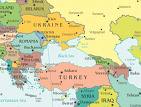
Turkey’s realignment is not limited to Russia it also includes Iran as well as Pakistan, which is in the process of severing its military ties with the US, while extending its trade and investment relations with China, Chossudovsky argues.
Turkey has an alliance of convenience with Iran. And Iran in turn is now supported by a powerful China-Russia block, which includes military cooperation, strategic pipelines as well extensive trade and investment agreements.
In turn, the unity of Saudi Arabia and the Gulf States is now in jeopardy, with Qatar, Oman and Kuwait building an alliance with Iran (as well as Turkey), to the detriment of Saudi Arabia and the UAE.
Saudi Arabia’s economic blockade directed against Qatar has created a rift in geopolitical alliances which has served to weaken the US in the Persian Gulf.
The Gulf Cooperation Council (GCC) is profoundly divided, with the UAE and Bahrain siding with Saudi Arabia against Qatar. In turn Qatar has the support of Oman and Kuwait. Needless to say, the GCC which until recently was America’s staunchest Middle East ally against Iran is in total disarray.
U.S. Central Command Military Base in Qatar
While Turkey is deploying troops in Qatar, it has also established the Tariq bin Ziyad military base in Qatar (in cooperation with the Qatari Ministry of Defense) under an agreement signed in 2014.
The Qatar based Al Udeid US military facility is the largest in the Middle East. Under USCentCom, it hosts the command structure of all US military operations in the entire Middle East-Central Asian region.
Al Udeid –which houses some 10,000 US military personnel–, has played a strategic role in the ongoing conduct of US air operations against Afghanistan, Iraq, and Syria.
There is however a fundamental contradiction: America’s largest military base in the Middle East which hosts USCentCom is at present located in a country which is firmly aligned with Iran (i.e. an enemy of America). Moreover, Qatar’s main partners in the oil and gas industry including pipelines are Iran and Turkey. In turn, both Russia and China are actively involved in the Qatari oil and gas industry.
In response to Qatar’s rapprochement with Iran, the Pentagon has already envisaged moving its Central Command headquarters at the Al Udeid Air Force base (image left) to the Prince Sultan Air Force base in central Saudi Arabia, 80 km south of Riyadh.
Meanwhile, the Pentagon is envisaging moving US Air Force facilities and personnel out of the Incirlik base in southern Turkey.
Prof Michel Chossudovsky concludes: The alliance between Washington and Ankara is in crisis. NATO is in crisis. In turn, a Turkey NATO-Exit could potentially destabilize NATO. Apart from Turkey, several EU countries including Germany, Italy, Greece (which has established defense ties with Russia) as well as Bulgaria could contemplate a NATO-Exit.


The Journal of America Team:
Editor in chief:
Abdus Sattar Ghazali
Senior Editor:
Prof. Arthur Scott
Disclaimer and Fair Use Notice: Many articles on this web site are written by independent individuals or organizations. Their opinions do not necessarily reflect those of the Journal of America and its affiliates. They are put here for interest and reference only. More details


Your donation
is tax deductable.


Article by
Journal Writes